Chemistry basics for kids: grades 6–7
Quick answer
This chemistry playlist for grades 6–7 (ages 11–13) covers matter and its properties, states of matter, atoms, elements and compounds, the periodic table and chemical changes, with videos from Crash Course Kids, Generation Genius, FuseSchool and Khan Academy. Play all on repeat as a lesson block, or loop one explanation until it clicks.
Videos in this playlist
- 1
 What's Matter? - Crash Course Kids #3.1Crash Course KidsPlay from here Loop
 - 2
 Part(icles) of Your World: Crash Course Kids #3.2Crash Course KidsPlay from here Loop
 - 3
 Hunting for Properties: Crash Course Kids #9.1Crash Course KidsPlay from here Loop
 - 4
 The Great Picnic Mix Up: Crash Course Kids #19.1Crash Course KidsPlay from here Loop
 - 5
 Chemical Changes: Crash Course Kids #19.2Crash Course KidsPlay from here Loop
 - 6
 Vacation or Conservation (Of Mass): Crash Course Kids #23.1Crash Course KidsPlay from here Loop
 - 7
 (LEGO) Block Party: Crash Course Kids #23.2Crash Course KidsPlay from here Loop
 - 8
 Organizing Properties: Crash Course Kids #35.1Crash Course KidsPlay from here Loop
 - 9
 Oobleck and Non-Newtonian Fluids: Crash Course Kids #46.1Crash Course KidsPlay from here Loop
 - 10
 Particle Model of Matter Video for Kids | Science Lesson for Grades 3-5 | Mini-ClipGenerationGeniusPlay from here Loop
 - 11
 Chemical vs. Physical Changes Video for Kids | Science Lesson for Grades 3-5 | Mini-ClipGenerationGeniusPlay from here Loop
 - 12
 Conservation of Matter Video for Kids | Science Lesson for Grades 3-5 | Mini-ClipGenerationGeniusPlay from here Loop
 - 13
 Properties of Matter for Kids | Science Lesson for Grades 3-5 | Mini-ClipGenerationGeniusPlay from here Loop
 - 14
 What Is An Atom? | Properties of Matter | Chemistry | FuseSchoolFuseSchool - Global EducationPlay from here Loop
 - 15
 Parts Of An Atom | Properties of Matter | Chemistry | FuseSchoolFuseSchool - Global EducationPlay from here Loop
 - 16
 What Is An Element, Mixture And Compound? | Properties of Matter | Chemistry | FuseSchoolFuseSchool - Global EducationPlay from here Loop
 - 17
 States of Matter (solids, liquids and gases) | Properties of Matter | Chemistry | FuseSchoolFuseSchool - Global EducationPlay from here Loop
 - 18
 Changes of State | Matter | Physics | FuseSchoolFuseSchool - Global EducationPlay from here Loop
 - 19
 How Does The Periodic Table Work | Properties of Matter | Chemistry | FuseSchoolFuseSchool - Global EducationPlay from here Loop
 - 20
 Mendeleev and the Periodic Table | Properties of Matter | Chemistry | FuseSchoolFuseSchool - Global EducationPlay from here Loop
 - 21
 What Are Periods & Groups In The Periodic Table? | Properties of Matter | Chemistry | FuseSchoolFuseSchool - Global EducationPlay from here Loop
 - 22
 How Do Atoms Bond | Properties of Matter | Chemistry | FuseSchoolFuseSchool - Global EducationPlay from here Loop
 - 23
 What Is The Law of Conservation of Mass | Properties of Matter | Chemistry | FuseSchoolFuseSchool - Global EducationPlay from here Loop
 - 24
 What Are Endothermic & Exothermic Reactions | Chemistry | FuseSchoolFuseSchool - Global EducationPlay from here Loop
 - 25
 What Are Catalysts? | Reactions | Chemistry | FuseSchoolFuseSchool - Global EducationPlay from here Loop
 - 26
 Properties Of Water | Properties of Matter | Chemistry | FuseSchoolFuseSchool - Global EducationPlay from here Loop
 - 27
 What Is Plasma | Properties of Matter | Chemistry | FuseSchoolFuseSchool - Global EducationPlay from here Loop
 - 28
 What Is Brownian Motion? | Properties of Matter | Chemistry | FuseSchoolFuseSchool - Global EducationPlay from here Loop
 - 29
 Protons, neutrons, and electrons in atoms | Chemistry | Khan AcademyKhan AcademyPlay from here Loop
 - 30
 Elements and atomic number | Chemistry | Khan AcademyKhan AcademyPlay from here Loop
 - 31
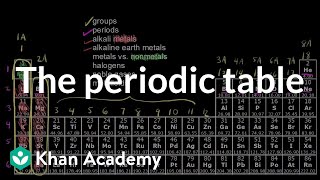 The periodic table | Atoms, elements, and the periodic table | High school chemistry | Khan AcademyKhan Academy Organic ChemistryPlay from here Loop
How does an A–B loop help with chemistry ideas?
Loop the part of a video that explains one idea, such as how protons, neutrons and electrons are arranged in an atom. Watching that short section several times helps a student draw the diagram from memory instead of only recognizing it.
In what order should the videos be watched?
The playlist starts with Crash Course Kids on matter and properties, moves to physical and chemical changes, then atoms, elements, the periodic table and bonding. Play all in order for a full unit, or pick the section that matches the current lesson.
Frequently asked questions
What is the difference between a physical and a chemical change?
A physical change, like melting ice, changes a substance's form but not what it is made of. A chemical change, like burning or rusting, makes a new substance. Generation Genius and Crash Course Kids both cover this with everyday examples.
Do these videos include experiments to try at home?
Some show simple demonstrations, but they are mainly explanations. Any hands-on experiment should be done with an adult and following the safety steps in the video.