5th grade point of view videos
Quick answer
In 5th grade (ages 10–11), children learn how a narrator's point of view shapes a story and how two accounts of one event differ. Start with Khan Academy's "A story's point of view" and TED-Ed's first, second and third person lesson, then compare texts. Play all on repeat, or loop one example.
Videos in this playlist
- 1
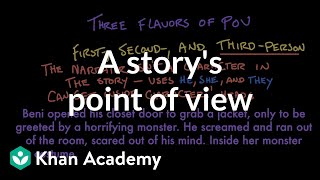 A story's point of view | Reading | Khan AcademyKhan AcademyPlay from here Loop
- 2
 First person vs. Second person vs. Third person - Rebekah BergmanTED-EdPlay from here Loop
- 3
 Point of View | 1st, 2nd, and 3rd Person Explained | It’s Easy With Twinkl | Twinkl USATwinkl Teaching Resources - United StatesPlay from here Loop
- 4
 Identifying Point of View - First- and Third-Person NarratorsMiacademy & MiaPrep Learning ChannelPlay from here Loop
- 5
 Narrators - How First-Person and Third-Person Point of View Shape StoriesMiacademy & MiaPrep Learning ChannelPlay from here Loop
- 6
 Point of View - How Perspective Shapes a StoryMiacademy & MiaPrep Learning ChannelPlay from here Loop
- 7
 How POV affects readers | Reading | Khan AcademyKhan AcademyPlay from here Loop
- 8
 Characters' thoughts and feelings | Reading | Khan AcademyKhan AcademyPlay from here Loop
- 9
 City Island | Point of View | PBS KIDSPBS KIDSPlay from here Loop
- 10
 Comparing first- and secondhand accounts | Reading | Khan AcademyKhan AcademyPlay from here Loop
- 11
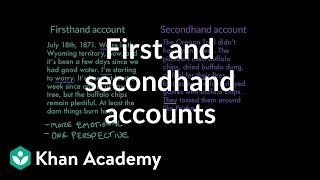 First and secondhand accounts | Reading | Khan AcademyKhan AcademyPlay from here Loop
- 12
 Reading multiple accounts of the same topic | Reading | Khan AcademyKhan AcademyPlay from here Loop
- 13
 Comparing two accounts of the same topic | Reading | Khan AcademyKhan AcademyPlay from here Loop
- 14
 Comparing Perspectives - Two Authors on the Same TopicMiacademy & MiaPrep Learning ChannelPlay from here Loop
- 15
 Comparing stories in the same genre | Reading | Khan AcademyKhan AcademyPlay from here Loop
- 16
 How to compare and contrast (Little Red Riding Hood): Crash Course Kids Literature #6Crash Course KidsPlay from here Loop
- 17
 Comparing written and spoken versions of a story | Reading | Khan AcademyKhan AcademyPlay from here Loop
What does this 5th grade point of view unit cover?
It covers first-person and third-person narrators, how a narrator's view changes what readers learn, firsthand and secondhand accounts, and comparing two texts on the same topic. By the end a child should name a story's point of view and explain how two accounts of one event differ.
How does RepeatWatch help with point of view?
Set an A–B loop on one passage where the narrator changes and replay it while your child names who is telling the story. Slow a dense reading example to 0.75×, save each lesson part on keys 1–9, and use Repeat one on a short explainer.
Frequently asked questions
What grade learns narrator point of view?
In the US, describing how a narrator's point of view shapes events is usually a 5th grade reading skill (ages 10–11), building on 4th grade firsthand and secondhand accounts. Grade levels vary by country and school, so start wherever your child is.
How can we keep a reading session short?
Watch one lesson, then read a short story together and ask who is telling it. Use Stop after N loops so a video ends on its own. Videos play in YouTube's player, so YouTube may show ads.