1st grade reading comprehension videos
Quick answer
In 1st grade (ages 6–7), children learn to talk about characters, setting and key details, find the main idea and retell a story in order. This playlist starts with Rock ’N Learn’s How to Read for Meaning, then Khan Academy Kids lessons and Twinkl read-alongs with questions. Put a short lesson on repeat.
Videos in this playlist
- 1
 Reading Comprehension for Kids | How to Read for MeaningRock 'N LearnPlay from here Loop
- 2
 The Key Details of a Story | Reading Comprehension | Khan Academy KidsKhan Academy KidsPlay from here Loop
- 3
 Who, When, Where | Reading Comprehension | Khan Academy KidsKhan Academy KidsPlay from here Loop
- 4
 What, Why, How | Reading Comprehension | Khan Academy KidsKhan Academy KidsPlay from here Loop
- 5
 All About Characters | Reading Comprehension | Khan Academy KidsKhan Academy KidsPlay from here Loop
- 6
 How to Learn about Characters | Reading Comprehension | Khan Academy KidsKhan Academy KidsPlay from here Loop
- 7
 Identifying the Setting of a Story | Reading Comprehension | Khan Academy KidsKhan Academy KidsPlay from here Loop
- 8
 Beginning, Middle, and End | Reading Comprehension | Khan Academy KidsKhan Academy KidsPlay from here Loop
- 9
 Retelling a Story | Reading Comprehension | Khan Academy KidsKhan Academy KidsPlay from here Loop
- 10
 Main Idea for Kids | What is the main idea? | Finding the main idea in books and storiesLearn BrightPlay from here Loop
- 11
 Asking Questions While You Read | Reading Comprehension | Khan Academy KidsKhan Academy KidsPlay from here Loop
- 12
 Making Predictions | Reading Comprehension | Khan Academy KidsKhan Academy KidsPlay from here Loop
- 13
 Visualizing While You Read | Reading Comprehension | Khan Academy KidsKhan Academy KidsPlay from here Loop
- 14
 How Illustrations Show Plot | Reading Comprehension | Khan Academy KidsKhan Academy KidsPlay from here Loop
- 15
 Finding the Lesson of a Story | Reading Comprehension | Khan Academy KidsKhan Academy KidsPlay from here Loop
- 16
 Fiction v. Nonfiction | Reading Comprehension | Khan Academy KidsKhan Academy KidsPlay from here Loop
- 17
 Fiction vs. Non-fiction (song for kids about distinguishing fiction vs. non-fiction texts)Harry Kindergarten MusicPlay from here Loop
- 18
 Checking Your Comprehension | Reading Comprehension | Khan Academy KidsKhan Academy KidsPlay from here Loop
- 19
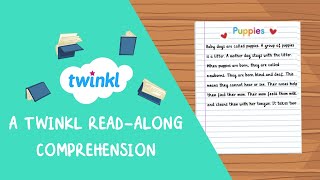 All About Puppies! | Reading Comprehension for Emerging Readers | First Grade Level | Twinkl USATwinkl Teaching Resources - United StatesPlay from here Loop
- 20
 The Biggest Pumpkin Read-Along | First Grade Reading Comprehension | Twinkl USATwinkl Teaching Resources - United StatesPlay from here Loop
- 21
 What Do Squirrels Do in the Fall | Reading Comprehension for Emergent Readers | Twinkl USATwinkl Teaching Resources - United StatesPlay from here Loop
- 22
 Penguin or Puffin? | Kids Book Read Aloud | Story Time with Khan Academy Kids | Nonfiction booksKhan Academy KidsPlay from here Loop
- 23
 The New Class | Kids Book Read Aloud | Story Time with Khan Academy Kids | Back to SchoolKhan Academy KidsPlay from here Loop
What reading comprehension skills are covered in 1st grade?
First graders learn to ask and answer who, what, where, when, why and how questions, describe characters and settings, retell a story’s beginning, middle and end, find the main idea of a nonfiction text and tell fiction from nonfiction. Grade levels and reading goals vary by country and school.
How can RepeatWatch help with read-alouds and questions?
Set an A–B loop around one part of a story so your child can listen again before answering a question. Slow the reading to 0.75× for a new reader, and save the beginning, middle and end to keys 1–9 for retelling practice.
Frequently asked questions
What should my child be able to do after this unit?
A child should retell a short story in order, name its characters and setting, say what a simple nonfiction text is mostly about, and use pictures and details to answer questions. Pausing a read-along to ask what might happen next is good practice.
Are the Twinkl read-alongs at a 1st grade level?
Twinkl labels its read-alongs by level. We included the ones marked for emergent readers or first grade, plus two Khan Academy Kids book read-alouds. Your child can read the words on screen or just listen, then answer the questions.