7th grade atoms and chemical reactions videos
Quick answer
This 7th grade chemistry playlist (ages 12–13) covers atoms, elements, the periodic table, compounds and molecules, physical versus chemical changes, and balancing chemical equations, with Khan Academy's middle school chemistry, FuseSchool and TED-Ed's "Just How Small is an Atom?". Play all on repeat, or loop one worked example.
Videos in this playlist
- 1
 Introduction to middle school chemistry | Khan AcademyKhan AcademyPlay from here Loop
- 2
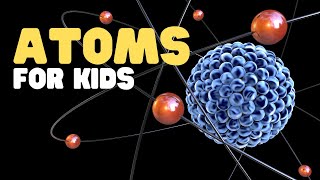 Atoms for Kids | What is an atom? | Learn about atoms and molecules with activities and worksheetsLearn BrightPlay from here Loop
- 3
 Just How Small is an Atom?TED-EdPlay from here Loop
- 4
 Atoms | Middle school chemistry | Khan AcademyKhan AcademyPlay from here Loop
- 5
 Atoms | Learn about protons, neutrons, and electronsLearn BrightPlay from here Loop
- 6
 What Is An Atom? | Properties of Matter | Chemistry | FuseSchoolFuseSchool - Global EducationPlay from here Loop
- 7
 Elements | Middle school chemistry | Khan AcademyKhan AcademyPlay from here Loop
- 8
 Elements and atomic number | Chemistry | Khan AcademyKhan AcademyPlay from here Loop
- 9
 The periodic table | Middle school chemistry | Khan AcademyKhan AcademyPlay from here Loop
- 10
 Reading the Periodic Table | Learn how to read the information of each elementLearn BrightPlay from here Loop
- 11
 Compounds and chemical formulas | Middle school chemistry | Khan AcademyKhan AcademyPlay from here Loop
- 12
 Molecules, crystals, and diatomic elements | Middle school chemistry | Khan AcademyKhan AcademyPlay from here Loop
- 13
 What Is An Element, Mixture And Compound? | Properties of Matter | Chemistry | FuseSchoolFuseSchool - Global EducationPlay from here Loop
- 14
 Physical changes | Middle school chemistry | Khan AcademyKhan AcademyPlay from here Loop
- 15
 Chemical changes | Middle school chemistry | Khan AcademyKhan AcademyPlay from here Loop
- 16
 Chemical vs. Physical Changes Video for Kids | Science Lesson for Grades 3-5 | Mini-ClipGenerationGeniusPlay from here Loop
- 17
 Physical and Chemical Changes: Chemistry for Kids - FreeSchoolFree SchoolPlay from here Loop
- 18
 Physical and Chemical Changes for KidsHomeschool PopPlay from here Loop
- 19
 Chemical Changes: Crash Course Kids #19.2Crash Course KidsPlay from here Loop
- 20
 Chemical reactions | Middle school chemistry | Khan AcademyKhan AcademyPlay from here Loop
- 21
 Chemical equations | Middle school chemistry | Khan AcademyKhan AcademyPlay from here Loop
- 22
 Vacation or Conservation (Of Mass): Crash Course Kids #23.1Crash Course KidsPlay from here Loop
- 23
 What Is The Law of Conservation of Mass | Properties of Matter | Chemistry | FuseSchoolFuseSchool - Global EducationPlay from here Loop
- 24
 Worked examples: Balancing chemical equations | Middle school chemistry | Khan AcademyKhan AcademyPlay from here Loop
- 25
 Worked examples: Balancing more complex chemical equations | Middle school chemistry | Khan AcademyKhan AcademyPlay from here Loop
- 26
 Energy changes in chemical reactions (part 1) | Middle school chemistry | Khan AcademyKhan AcademyPlay from here Loop
- 27
 What Are Endothermic & Exothermic Reactions | Chemistry | FuseSchoolFuseSchool - Global EducationPlay from here Loop
What should a 7th grader know about atoms and reactions?
In 7th grade, students learn that all matter is made of atoms, that atoms join into molecules, and that chemical reactions rearrange atoms into new substances. After this unit they can tell a physical change from a chemical one and balance a simple equation. Grade levels vary by country and school.
How does looping help with balancing equations?
Set an A–B loop on one example in Khan Academy's "Worked examples: Balancing chemical equations". Watch it, pause, try the same equation on paper, then replay the loop to check each step. Slowing it to 0.75× gives time to count the atoms on both sides.
Frequently asked questions
How is this playlist ordered?
It starts with what an atom is, moves to elements and the periodic table, then compounds and molecules. Next come physical and chemical changes, chemical reactions and conservation of mass, and it ends with worked examples of balancing equations and energy in reactions.
Can I keep chemistry review sessions short?
Yes. Use Stop after N loops so a video stops after a set number of plays, and save the parts you need most, such as the periodic table walkthrough, on the number keys 1–9 for quick review.