Writing skills for middle school: grades 6–7
Quick answer
Writing lessons for grades 6–7 (ages 11–13): TED-Ed's "How to write descriptively" and "The power of a great introduction", plus Rock 'N Learn on proofreading and Learn Bright on sentence types. Play all on repeat for a writing block, or Repeat one on a single lesson while your child drafts.
Videos in this playlist
- 1
 Writing SkillsRock 'N LearnPlay from here Loop
 - 2
 How to write descriptively - Nalo HopkinsonTED-EdPlay from here Loop
 - 3
 Descriptive Writing for Kids | Learn how to use the senses to describe things in writingLearn BrightPlay from here Loop
 - 4
 The power of a great introduction - Carolyn MohrTED-EdPlay from here Loop
 - 5
 Three anti-social skills to improve your writing - Nadia KalmanTED-EdPlay from here Loop
 - 6
 Compare and Contrast for Kids | Learn how to compare and contrast anything!Learn BrightPlay from here Loop
 - 7
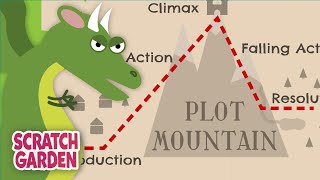 Plot Mountain! | The Plot Diagram Song | Scratch GardenScratch GardenPlay from here Loop
 - 8
 The Story Writing Song (Plot Mountain 2) Scratch GardenScratch GardenPlay from here Loop
 - 9
 How to make your writing suspenseful - Victoria SmithTED-EdPlay from here Loop
 - 10
 How to make your writing funnier - Cheri SteinkellnerTED-EdPlay from here Loop
 - 11
 How to build a fictional world - Kate MessnerTED-EdPlay from here Loop
 - 12
 What makes a hero? - Matthew WinklerTED-EdPlay from here Loop
 - 13
 First person vs. Second person vs. Third person - Rebekah BergmanTED-EdPlay from here Loop
 - 14
 Point of View | 1st, 2nd, and 3rd Person Explained | It’s Easy With Twinkl | Twinkl USATwinkl Teaching Resources - United StatesPlay from here Loop
 - 15
 The art of the metaphor - Jane HirshfieldTED-EdPlay from here Loop
 - 16
 Figurative Language for Kids | Similes, Metaphors & IdiomsHomeschool PopPlay from here Loop
 - 17
 Figurative Language for Kids | It's Easy With Twinkl | Twinkl USATwinkl Teaching Resources - United StatesPlay from here Loop
 - 18
 Idioms for Kids | What Is an Idiom, and What Do They Mean?Learn BrightPlay from here Loop
 - 19
 Situational irony: The opposite of what you think - Christopher WarnerTED-EdPlay from here Loop
 - 20
 What is verbal irony? - Christopher WarnerTED-EdPlay from here Loop
 - 21
 What makes a poem … a poem? - Melissa KovacsTED-EdPlay from here Loop
 - 22
 The pleasure of poetic pattern - David SilversteinTED-EdPlay from here Loop
 - 23
 Become a slam poet in five steps - Gayle DanleyTED-EdPlay from here Loop
 - 24
 How to use rhetoric to get what you want - Camille A. LangstonTED-EdPlay from here Loop
 - 25
 Beware of nominalizations (AKA zombie nouns) - Helen SwordTED-EdPlay from here Loop
 - 26
 Types of Sentences for Kids | Grammar for Elementary StudentsHomeschool PopPlay from here Loop
 - 27
 Simple and Compound Sentences for Kids | Learn the difference between simple and compound sentencesLearn BrightPlay from here Loop
 - 28
 Conjunctions for Kids | Learn about coordinating, correlative, and subordinating conjunctionsLearn BrightPlay from here Loop
 - 29
 Subordinating Conjunctions | Learn about how to use subordinating conjunctionsLearn BrightPlay from here Loop
 - 30
 Punctuation for Kids | Learn all about the different punctuation marks and what they doLearn BrightPlay from here Loop
 - 31
 Comma story - Terisa FolaronTED-EdPlay from here Loop
 - 32
 How to use a semicolon - Emma BryceTED-EdPlay from here Loop
 - 33
 When to use apostrophes - Laura McClureTED-EdPlay from here Loop
 - 34
 Proofreading SkillsRock 'N LearnPlay from here Loop
What writing skills does this playlist cover?
Story writing (plot, suspense, humor, world-building and heroes), descriptive and persuasive writing, point of view, figurative language and irony, poetry, and the mechanics that hold it together: sentence types, conjunctions, commas, semicolons, apostrophes and proofreading.
How can looping help while writing?
Open a lesson next to a draft and set an A–B loop on the one tip your child is applying, such as building suspense. It replays while they revise. Slow fast explanations to 0.75x and save the parts they need on keys 1–9.
Frequently asked questions
Are TED-Ed lessons too advanced for 6th graders?
TED-Ed lessons are short animations written for students, and the writing ones suit ages 11 and up. A few, like zombie nouns or rhetoric, stretch toward high school, so start with descriptive writing, introductions and point of view.
How can I keep screen time short?
Watch one lesson, then write for longer than you watched. Stop after a set number of loops, or use the sleep timer to end playback. Videos play in YouTube's player, so YouTube may show ads.