Bonds and lower-risk investments, explained
Quick answer
Not all money belongs in stocks. Investor.gov and the St. Louis Fed explain what bonds are, Charles Schwab and Khan Academy show how interest rates move bond prices, and NerdWallet covers Treasury bills and CDs. Ben Felix explains what lower risk costs. Press Play all on repeat, or A–B loop the hardest part.
Videos in this playlist
- 1
 What Are Bonds?U.S. Securities and Exchange CommissionPlay from here Loop
 - 2
 Understanding Bonds - No-Frills Money SkillsFederal Reserve Bank of St. LouisPlay from here Loop
 - 3
 Bonds | Using Debt to InvestThe Plain BagelPlay from here Loop
 - 4
 Investing Basics: BondsCharles SchwabPlay from here Loop
 - 5
 What's the Difference Between Bonds and Stocks?Charles SchwabPlay from here Loop
 - 6
 Intro to the Bond MarketMarginal Revolution UniversityPlay from here Loop
 - 7
 How the Bond Market WorksCharles SchwabPlay from here Loop
 - 8
 Relationship between bond prices and interest rates | Finance & Capital Markets | Khan AcademyKhan AcademyPlay from here Loop
 - 9
 How Do Interest Rates Affect Bonds?Morningstar, Inc.Play from here Loop
 - 10
 What is the Bond Market & How Does it Work? | Office Hours with Gary GenslerU.S. Securities and Exchange CommissionPlay from here Loop
 - 11
 The U.S. Treasury Markets Explained | Office Hours with Gary GenslerU.S. Securities and Exchange CommissionPlay from here Loop
 - 12
 What is the Yield Curve, and Why is it Flattening?The Plain BagelPlay from here Loop
 - 13
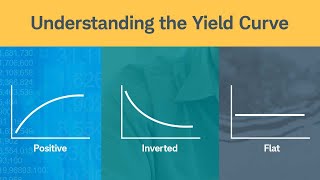 Understanding the Yield CurveCharles SchwabPlay from here Loop
 - 14
 Bond. Savings Bond.Two CentsPlay from here Loop
 - 15
 T-Bills Explained: Do THIS To Invest With Treasury BillsNerdWalletPlay from here Loop
 - 16
 How To Buy A Treasury Bill For Beginners | NerdWalletNerdWalletPlay from here Loop
 - 17
 What Are Bond Ladders?Charles SchwabPlay from here Loop
 - 18
 CD Accounts Explained | Finance 101NerdWalletPlay from here Loop
 - 19
 CD Accounts Explained: Use For Strong Fixed Returns | NerdWalletNerdWalletPlay from here Loop
 - 20
 CD Ladder Explained: 3 Strategies To Increase Your Savings | NerdWalletNerdWalletPlay from here Loop
 - 21
 No Penalty CD vs High-Yield Savings Account: The BEST Return On Your Cash | NerdWalletNerdWalletPlay from here Loop
 - 22
 Investing in Money Market Funds | VanguardVanguardPlay from here Loop
 - 23
 Where To Park Your Cash | NerdWalletNerdWalletPlay from here Loop
 - 24
 Short-Term Investment Options For Your Cash | Money Unscripted | Fidelity InvestmentsFidelity InvestmentsPlay from here Loop
 - 25
 Choosing an Asset Allocation (How Much in Stocks vs. Bonds?)Ben FelixPlay from here Loop
 - 26
 Why Retirees Need a Balanced PortfolioMorningstar, Inc.Play from here Loop
 - 27
 Should You Invest in Stocks, Bonds, or a 5% CD?Morningstar, Inc.Play from here Loop
 - 28
 Bond Index Funds in Rising-Rate Environments | Common Sense Investing with Ben FelixBen FelixPlay from here Loop
 - 29
 Cash is a terrible long-term investment, even at 5% interestBen FelixPlay from here Loop
 - 30
 Why You Should Think Twice about High Yield Bonds | Common Sense InvestingBen FelixPlay from here Loop
 - 31
 Why I Prefer to Avoid Preferred Shares | Common Sense InvestingBen FelixPlay from here Loop
 - 32
 "Crash-Proof" Investments: How Safe Havens Performed in Our Recent Bear MarketThe Plain BagelPlay from here Loop
 - 33
 4 Mistakes to Avoid With Your Bond Portfolio Right NowMorningstar, Inc.Play from here Loop
What are bonds and lower-risk investments?
A bond is a loan to a government or company that pays interest and returns your money at the end, if the borrower can pay. Government bills, savings certificates (CDs) and money market funds are other lower-risk places for cash. Lower risk usually means lower expected returns, and inflation can still erode them.
How do I use RepeatWatch to learn this?
Press Play all on repeat and go from what a bond is to how bond prices move. A–B loop the explanation of why bond prices fall when interest rates rise, and slow it to 0.75× to sketch the example. Save the parts on bills, CDs and ladders on keys 1–9.
Frequently asked questions
Are bonds risk-free?
No. Bond prices fall when interest rates rise, borrowers can default, and high-yield bonds behave more like stocks. Inflation can reduce what your interest is really worth. Short-term government debt and insured deposits are among the lowest-risk options, depending on your country.
Do Treasury bills and CDs exist where I live?
Several videos here describe US products. Most countries have their own government bills and bonds, fixed deposits or savings certificates, and money market funds, each with different rules, protection and taxes. Check your central bank, treasury or financial regulator for what is available.
Is this financial advice?
No. These videos are educational and come from the channels that published them. They are not financial, tax or legal advice for your situation. For personal decisions, consider talking to a qualified, regulated financial adviser.