1st grade sun, moon and stars videos
Quick answer
This playlist covers 1st grade sun, moon and stars, from Homeschool Pop's "The Sun for Kids" and Crash Course Kids on day and night to FreeSchool's phases of the moon and the Generation Genius "Sun, Moon & Stars" song. Press Play all on repeat, or loop one moon phase explanation until it makes sense.
Videos in this playlist
- 1
 The Sun for Kids | Solar System ScienceHomeschool PopPlay from here Loop
- 2
 Our Sun | Science videos for kids | Kids AcademyKids AcademyPlay from here Loop
- 3
 All About the Sun for Kids: Astronomy and Space for ChildrenFree SchoolPlay from here Loop
- 4
 How the Sun affects the Earth | Science videos for kids | Kids AcademyKids AcademyPlay from here Loop
- 5
 READY JET GO! | The Sun's Power | PBS KIDSPBS KIDSPlay from here Loop
- 6
 Earth's Rotation & Revolution: Crash Course Kids 8.1Crash Course KidsPlay from here Loop
- 7
 Following the Sun: Crash Course Kids #8.2Crash Course KidsPlay from here Loop
- 8
 The Moon for Kids | Facts About Earth’s MoonHomeschool PopPlay from here Loop
- 9
 All About the Moon: Astronomy and Space for Kids - FreeSchoolFree SchoolPlay from here Loop
- 10
 Why Does the Moon Change?SciShow KidsPlay from here Loop
- 11
 Phases of the Moon for Kids | Science for Elementary StudentsHomeschool PopPlay from here Loop
- 12
 Phases of the Moon | Learn all about the moon for kids!Learn BrightPlay from here Loop
- 13
 Phases of the Moon: Astronomy and Space for Kids - FreeSchoolFree SchoolPlay from here Loop
- 14
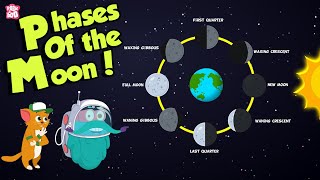 Phases Of The Moon | Why Does The Moon Change Its Shape? | Space | Dr Binocs Show | Peekaboo KidzPeekaboo KidzPlay from here Loop
- 15
 Learning About The Moon and Its PhasesMr. DeMaioPlay from here Loop
- 16
 What Are Stars?SciShow KidsPlay from here Loop
- 17
 All About Stars for Kids: Astronomy and Space for Children - FreeSchoolFree SchoolPlay from here Loop
- 18
 Constellations: Connect the Dots in the Sky!SciShow KidsPlay from here Loop
- 19
 The Magnificent Night Sky | Caitie's ClassroomSuper Simple Play with Caitie!Play from here Loop
- 20
 The Sun, Moon & Stars SONG | Science for Kids | Grades K-2GenerationGeniusPlay from here Loop
- 21
 The Sun Song | Science Songs | Scratch GardenScratch GardenPlay from here Loop
- 22
 Sesame Street: I Spy Stars Song with Elmo & Abby | Animated SongsSesame StreetPlay from here Loop
What do children learn about the sky in 1st grade?
In 1st grade (ages 6–7), children notice patterns in the sky: the sun seems to rise, move across the sky and set, stars are seen at night, and the moon's shape changes over about a month. They also compare daylight at different times of year. Grade levels vary by country and school.
How does RepeatWatch help with sky patterns?
Set an A–B loop on the moment a video shows Earth spinning or the moon's phases changing, and let it replay while you talk it through. Drop to 0.75× for new words such as crescent and rotation, save lesson parts to keys 1–9, and put a sky song on Repeat one.
Frequently asked questions
What should my child be able to do after this unit?
By the end, a child should be able to explain that day and night happen because Earth spins, describe how the sun appears to move during the day, name a few moon shapes in order and say that stars are suns far away.
How can I connect the videos to the real sky?
Watch one short video, then look at the moon each evening for a week and draw its shape. Use Stop after so a song plays a few times and ends, or set the sleep timer to keep screen time short.
Are some videos for older children?
Yes. The Crash Course Kids episodes are made for slightly older children, but their animations of Earth spinning are clear. Slow them to 0.75× or loop the animation for a 1st grader, and skip ahead past parts that go further.