3rd grade elapsed time lessons
Quick answer
In 3rd grade (ages 8–9), children tell time to the nearest minute and solve elapsed time problems with a clock and a number line. Lessons from Math Antics "Telling Time", Learn Bright and Math with Mr. J elapsed time videos, plus a Numberock song. Play all on repeat, or loop one example.
Videos in this playlist
- 1
 Math Antics - Telling TimemathanticsPlay from here Loop
- 2
 Telling Time for Kids | Learn to tell time on both Analog and Digital ClocksLearn BrightPlay from here Loop
- 3
 Learn to Tell Time on a Clock | Analog Clock Practice for Kids | Rock 'N LearnRock 'N LearnPlay from here Loop
- 4
 How to Tell Time for Kids | Learn to Read an Analog ClockMath with Mr. JPlay from here Loop
- 5
 How to Tell Time to the Nearest Minute | Reading a ClockMath with Mr. JPlay from here Loop
- 6
 What Do A.M. and P.M. Mean? | Understanding A.M. and P.M.Math with Mr. JPlay from here Loop
- 7
 An Intro to Elapsed Time Using a Clock | Math with Mr. JMath with Mr. JPlay from here Loop
- 8
 Elapsed Time Using a Clock (Under 1 Hour) | Start Time, End Time, & Elapsed TimeMath with Mr. JPlay from here Loop
- 9
 An Intro to Elapsed Time Using a Number Line | Math with Mr. JMath with Mr. JPlay from here Loop
- 10
 Elapsed Time Using Number Lines (Under 1 Hour) | Start Time, End Time, & Elapsed TimeMath with Mr. JPlay from here Loop
- 11
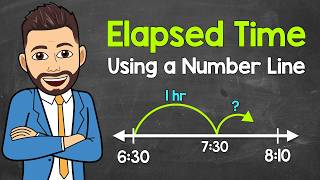 Finding Elapsed Time Using a Number Line (Over 1 Hour) | Math with Mr. JMath with Mr. JPlay from here Loop
- 12
 Elapsed Time on Number Lines (Over 1 Hour) | Full Lesson + PracticeMath with Mr. JPlay from here Loop
- 13
 Finding the End Time | Elapsed Time on a Number Line (Over 1 Hour)Math with Mr. JPlay from here Loop
- 14
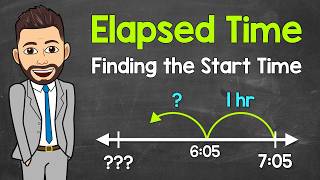 Finding the Start Time | Elapsed Time on a Number Line (Over 1 Hour)Math with Mr. JPlay from here Loop
- 15
 Telling Time Challenge ⏰ | Can You Pass All 4 Levels?Math with Mr. JPlay from here Loop
- 16
 Telling Time Song For Kids (AM & PM)NumberockPlay from here Loop
What does this 3rd grade time unit cover?
It reviews reading an analog clock, then telling time to the nearest minute and a.m. and p.m. Elapsed time starts on a clock, moves to open number lines, and finishes with finding start and end times over an hour. A child should solve how long from 2:15 to 3:40.
How does RepeatWatch help with elapsed time?
Elapsed time on a number line has several jumps, so set an A–B loop around one example and draw along. Slow it to 0.75×, save the clock and number line lessons on keys 1–9, and use Stop after N loops to keep it short.
Frequently asked questions
When do children learn elapsed time?
In the US, telling time to the minute and elapsed time in minutes are usually taught in 3rd grade (ages 8–9), after telling time to five minutes in 2nd grade. Grade levels vary by country and school.
Why use a number line for elapsed time?
A number line breaks the gap into easy jumps, such as to the next hour and then the extra minutes. Children add the jumps instead of counting around a clock face, which makes mistakes easier to spot.