5th grade research writing videos
Quick answer
In 5th grade (ages 10–11), children run short research projects: ask a question, find and judge sources, take notes and cite them. The OSLIS Elementary videos from the Oregon School Library Information System walk through each step, with Miacademy on reliable sources and Khan Academy on summaries. Play all on repeat, or loop one step.
Videos in this playlist
- 1
 Understanding Your AssignmentOSLIS Elementary VideosPlay from here Loop
- 2
 Choosing a Topic & Developing a Research QuestionOSLIS Elementary VideosPlay from here Loop
- 3
 Learn to Research Elementary: Plan StepOSLIS Elementary VideosPlay from here Loop
- 4
 Learn to Research Elementary: Find StepOSLIS Elementary VideosPlay from here Loop
- 5
 Using KeywordsOSLIS Elementary VideosPlay from here Loop
- 6
 Searching Effectively Boolean OperatorsOSLIS Elementary VideosPlay from here Loop
- 7
 Searching Effectively Phrase Searching & TruncationOSLIS Elementary VideosPlay from here Loop
- 8
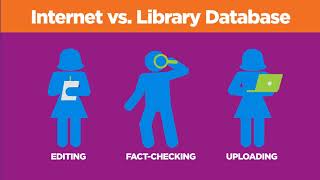 Using a Library DatabaseOSLIS Elementary VideosPlay from here Loop
- 9
 Evaluating & Choosing SourcesOSLIS Elementary VideosPlay from here Loop
- 10
 Evaluating Websites (for Elementary students)OSLIS Elementary VideosPlay from here Loop
- 11
 Reliable Sources - Identifying Sources in Research and Evaluating Their ReliabilityMiacademy & MiaPrep Learning ChannelPlay from here Loop
- 12
 Lateral Reading: Detecting Online Sources You Can TrustOSLIS Elementary VideosPlay from here Loop
- 13
 Using Videos as Sources: Detecting TrustworthinessOSLIS Elementary VideosPlay from here Loop
- 14
 Using Primary & Secondary SourcesOSLIS Elementary VideosPlay from here Loop
- 15
 Reading & Taking NotesOSLIS Elementary VideosPlay from here Loop
- 16
 Using The 5 Ws and the Bonus H to make summaries | Reading | Khan AcademyKhan AcademyPlay from here Loop
- 17
 Citing Sources: Why & How to Do ItOSLIS Elementary VideosPlay from here Loop
- 18
 Crediting Experts Using Signal PhrasesOSLIS Elementary VideosPlay from here Loop
- 19
 Learn to Research Elementary: Create StepOSLIS Elementary VideosPlay from here Loop
- 20
 Learn to Research Elementary: Present StepOSLIS Elementary VideosPlay from here Loop
What does this 5th grade research unit cover?
It covers understanding the assignment, choosing a topic and research question, searching with keywords, judging websites and videos as sources, primary and secondary sources, taking notes in your own words and citing sources. By the end a child should plan a short report and list where each fact came from.
How does RepeatWatch help with a research project?
Save each step, from planning to presenting, on keys 1–9 so your child can jump back while working. Set an A–B loop on the note-taking or citing example, slow it to 0.75× and copy the format onto paper.
Frequently asked questions
What grade learns to do research and cite sources?
In the US, short research projects that use several sources, take notes and list sources are a 5th grade writing goal (ages 10–11). Grade levels vary by country and school, so start wherever your child is.
How can we keep a research session short?
Do one step per session: watch one video, then take that step on your own project. Use Stop after N loops so a video ends on its own. Videos play in YouTube's player, so YouTube may show ads.