7th grade ecosystems and interactions videos
Quick answer
This 7th grade ecosystems playlist (ages 12–13) covers habitats and niches, food webs and energy pyramids, competition, predation, symbiosis and biodiversity, with Amoeba Sisters' "Ecological Relationships", Khan Academy and TED-Ed's "Why is biodiversity so important?". Play all on repeat, or loop one relationship type until it sticks.
Videos in this playlist
- 1
 Ecosystems Video Lesson for Kids | Grades 3-5 | Mini-ClipGenerationGeniusPlay from here Loop
- 2
 Ecosystems for Kids | Plants, Animals, & Their EnvironmentHomeschool PopPlay from here Loop
- 3
 Ecosystems and biomes | Ecology and natural systems | High school biology | Khan AcademyKhan AcademyPlay from here Loop
- 4
 Abiotic factors and an organism's range | High school biology | Khan AcademyKhan AcademyPlay from here Loop
- 5
 An organism's niche | Ecology and natural systems | High school biology | Khan AcademyKhan AcademyPlay from here Loop
- 6
 Home Sweet Habitat: Crash Course Kids #21.1Crash Course KidsPlay from here Loop
- 7
 Autotrophs and HeterotrophsAmoeba SistersPlay from here Loop
- 8
 Food Webs: Crash Course Kids #21.2Crash Course KidsPlay from here Loop
- 9
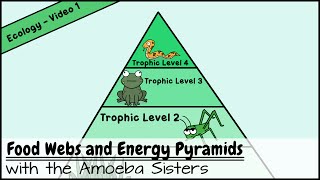 Food Webs and Energy Pyramids: Bedrocks of BiodiversityAmoeba SistersPlay from here Loop
- 10
 Trophic levels | Middle school biology | Khan AcademyKhan AcademyPlay from here Loop
- 11
 Flow of energy and matter through ecosystems | High school biology | Khan AcademyKhan AcademyPlay from here Loop
- 12
 Ecological RelationshipsAmoeba SistersPlay from here Loop
- 13
 Predator-prey population cycles | Ecology and natural systems | High school biology | Khan AcademyKhan AcademyPlay from here Loop
- 14
 Why is biodiversity so important? - Kim PreshoffTED-EdPlay from here Loop
- 15
 Biodiversity | Biodiversity and human impacts | High school biology | Khan AcademyKhan AcademyPlay from here Loop
- 16
 Invasive Species 101 | National GeographicNational GeographicPlay from here Loop
- 17
 Coral Reefs 101 | National GeographicNational GeographicPlay from here Loop
- 18
 Rainforests 101 | National GeographicNational GeographicPlay from here Loop
- 19
 Ecological Succession: Nature's Great GritAmoeba SistersPlay from here Loop
- 20
 Biomes and Ecosystems for Kids | Learn about the different types of ecosystems and biomesLearn BrightPlay from here Loop
- 21
 Ecology Review: Food Chains & Webs, Relationships, Nitrogen & Carbon Cycles, Effects on BiodiversityAmoeba SistersPlay from here Loop
What does 7th grade ecosystems cover?
In 7th grade, students learn how living things depend on each other and on their environment. After this unit they can trace energy through a food web and explain competition, predation, mutualism, commensalism and parasitism, and why biodiversity keeps ecosystems stable. Grade levels vary by country and school.
How does an A–B loop help with ecological relationships?
Amoeba Sisters' "Ecological Relationships" gives a quick example of each type. Save each example as its own A–B section on the number keys 1–9, then replay them in turn until a student can name the relationship before the narrator does.
Frequently asked questions
Some videos say high school. Are they too hard?
The Khan Academy ecology videos are labeled high school, but they explain niches, predator-prey cycles and biodiversity in plain language that suits a confident 7th grader. Slow them to 0.75× and loop the key graphs if they feel fast.
Can I keep screen time short?
Yes. Use Stop after N loops so one video plays a set number of times and stops, or play just the short Crash Course Kids and Generation Genius lessons near the top for a quick review.