7th grade Middle Ages around the world
Quick answer
In 7th grade (ages 12–13), students study the years from about 500 to 1500 across the world. This playlist covers medieval Europe, the Islamic world, the Ghana and Mali empires and Song China, with TED-Ed, Crash Course World History and Learn Bright. Repeat one lesson or loop a section on one empire.
Videos in this playlist
- 1
 6 myths about the Middle Ages that everyone believes - Stephanie Honchell SmithTED-EdPlay from here Loop
- 2
 The Dark Ages...How Dark Were They, Really?: Crash Course World History #14CrashCoursePlay from here Loop
- 3
 Castles for Kids: What is a Castle? Medieval History for Children - FreeSchoolFree SchoolPlay from here Loop
- 4
 How to attack (and defend) a medieval castle - Connor C. WilsonTED-EdPlay from here Loop
- 5
 How dangerous was it to be a jester? - Beatrice K. OttoTED-EdPlay from here Loop
- 6
 The secret messages of Viking runestones - Jesse ByockTED-EdPlay from here Loop
- 7
 The underground cities of the Byzantine Empire - Veronica KalasTED-EdPlay from here Loop
- 8
 The Crusades - Pilgrimage or Holy War?: Crash Course World History #15CrashCoursePlay from here Loop
- 9
 What was the Bubonic Plague?Mr. DeMaioPlay from here Loop
- 10
 Islam, the Quran, and the Five Pillars: Crash Course World History #13CrashCoursePlay from here Loop
- 11
 The rise and fall of the medieval Islamic Empire - Petra Sijpesteijn & Birte KristiansenTED-EdPlay from here Loop
- 12
 A day in the life of a teenager in medieval Baghdad - Birte Kristiansen and Petra SijpesteijnTED-EdPlay from here Loop
- 13
 The complex geometry of Islamic design - Eric BrougTED-EdPlay from here Loop
- 14
 Desert Empires - History Of Africa with Zeinab Badawi [Episode 10]BBC News AfricaPlay from here Loop
- 15
 Who Was Mansa Musa? | Learn about one of the wealthiest people in world historyLearn BrightPlay from here Loop
- 16
 Mansa Musa, one of the wealthiest people who ever lived - Jessica SmithTED-EdPlay from here Loop
- 17
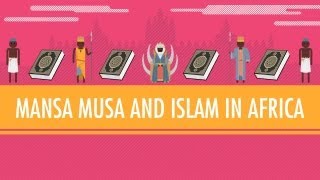 Mansa Musa and Islam in Africa: Crash Course World History #16CrashCoursePlay from here Loop
- 18
 The hidden treasures of Timbuktu - Elizabeth CoxTED-EdPlay from here Loop
- 19
 Islam in Africa - History Of Africa with Zeinab Badawi [Episode 9]BBC News AfricaPlay from here Loop
- 20
 Who built Great Zimbabwe? And why? - Breeanna ElliottTED-EdPlay from here Loop
- 21
 A day in the life of a martial artist in medieval China - Peter LorgeTED-EdPlay from here Loop
- 22
 The deadly irony of gunpowder - Eric RosadoTED-EdPlay from here Loop
- 23
 Int'l Commerce, Snorkeling Camels, and The Indian Ocean Trade: Crash Course World History #18CrashCoursePlay from here Loop
- 24
 Wait For It...The Mongols!: Crash Course World History #17CrashCoursePlay from here Loop
- 25
 The rise and fall of the Mongol Empire - Anne F. BroadbridgeTED-EdPlay from here Loop
- 26
 Japan in the Heian Period and Cultural History: Crash Course World History 227CrashCoursePlay from here Loop
What should a 7th grader be able to do after this unit?
Describe life in medieval Europe, explain what made the Islamic Golden Age a center of learning, explain how gold and salt trade built Ghana and Mali, describe inventions and trade in Song China, and compare these societies. Grade levels vary by country and school.
How can a loop help compare empires?
Save one section for each region on keys 1–9, such as Baghdad, Mali and Song China, then jump between them while a student fills in a comparison chart. An A–B loop at 0.75× helps with names and dates.
Frequently asked questions
Why does this playlist go beyond Europe?
The Middle Ages were a busy time across the world. Baghdad, Timbuktu and Song China were major centers of learning, trade and invention, so the playlist gives them as much time as castles and knights.
Are any videos long or better for older students?
BBC News Africa’s Desert Empires episode on Ghana, Mali and Songhai is a full documentary, so save sections to watch it in parts. Crash Course lessons move fast and suit strong readers.
Are these videos from official channels?
Yes. Every video comes from the official TED-Ed, Crash Course, Learn Bright, FreeSchool, Mr. DeMaio or BBC News Africa channel. Videos play in YouTube’s player, so YouTube may show ads.