Fish farming: tilapia and catfish basics
Quick answer
A free aquaculture course for tilapia, catfish and carp farmers. It starts with the Southern Regional Aquaculture Center on catfish farming and FAO's story of a Kenyan fish farmer, then the WorldFish best-practice series on ponds, stocking, feeding and harvest. Press Play all on repeat to work through it, or A–B loop one step.
Videos in this playlist
- 1
 Catfish Farming in the SouthSouthern Regional Aquaculture CenterPlay from here Loop
 - 2
 Joyce – A Kenyan Fish Farming EntrepreneurFood and Agriculture Organization of the United NationsPlay from here Loop
 - 3
 Agri Astuces : Fish farming, the keys to successful breedingAgribusiness TVPlay from here Loop
 - 4
 Site selection and pond preparationWorldFishPlay from here Loop
 - 5
 Fish Farm Setup and EquipmentWorldFishPlay from here Loop
 - 6
 Pond ConstructionWorldFishPlay from here Loop
 - 7
 Fish Pond FertilizationWorldFishPlay from here Loop
 - 8
 Pond StockingWorldFishPlay from here Loop
 - 9
 Fish FeedingWorldFishPlay from here Loop
 - 10
 Good Aquaculture Practice: Feed ManagementWorldFishPlay from here Loop
 - 11
 Water ManagementWorldFishPlay from here Loop
 - 12
 Water Quality MeasurementsWorldFishPlay from here Loop
 - 13
 Introduction to Water Quality TestingSouthern Regional Aquaculture CenterPlay from here Loop
 - 14
 Water Quality Testing and ManagementSouthern Regional Aquaculture CenterPlay from here Loop
 - 15
 Water Quality DynamicsSouthern Regional Aquaculture CenterPlay from here Loop
 - 16
 Fish HealthWorldFishPlay from here Loop
 - 17
 Fish Health CareWorldFishPlay from here Loop
 - 18
 Biosecurity in tilapia productionWorldFishPlay from here Loop
 - 19
 Tilapia Lake Virus (TiLV) an emerging threat for tilapia aquaculture worldwideWorldFishPlay from here Loop
 - 20
 Channel Catfish Spawning & Hatchery ManagementSouthern Regional Aquaculture CenterPlay from here Loop
 - 21
 Live Fish HandlingWorldFishPlay from here Loop
 - 22
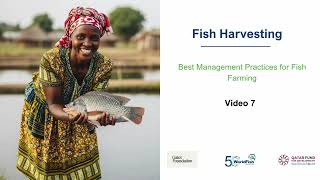 Fish HarvestingWorldFishPlay from here Loop
 - 23
 Warmwater Finfish: Harvesting, Handling, and TransportationSouthern Regional Aquaculture CenterPlay from here Loop
 - 24
 Live Fish Transportation System: Delivering Fresh Fish from Pond to MarketWorldFishPlay from here Loop
 - 25
 Record KeepingWorldFishPlay from here Loop
 - 26
 Advanced Aquaculture Systems - Split PondsSouthern Regional Aquaculture CenterPlay from here Loop
 - 27
 In-pond raceway system helps farmers in Egypt increase aquaculture productivityWorldFishPlay from here Loop
 - 28
 Kenya: Aquaponics, produce more in less spaceAgribusiness TVPlay from here Loop
 - 29
 Indonesia Rice-Fish FarmingFood and Agriculture Organization of the United NationsPlay from here Loop
 - 30
 Shamba Shape Up Season 15 – Episode 22:Polyculture, Crab Shack, Solar freezing &Dagaa processor(Eng)AKZ TV - AfricaknowledgezonePlay from here Loop
 - 31
 Women and Youth in AquacultureWorldFishPlay from here Loop
 - 32
 Research and training center supports growth of aquaculture in AfricaWorldFishPlay from here Loop
 - 33
 Carp Fattening Fish Farming: A Farmer's ExperienceWorldFishPlay from here Loop
 - 34
 Aquaculture is changing lives in BangladeshWorldFishPlay from here Loop
How does a fish farm make money?
A fish farm buys fingerlings, grows them in ponds, tanks or cages, and sells them at a target size to markets, restaurants or traders. Feed is usually the largest cost, so feeding well and keeping water healthy decide profit. Some farms also sell fingerlings from their own hatchery.
How do I use RepeatWatch to learn fish farming?
Play all on repeat as a course, from site selection to harvest. Slow a lesson to 0.75× when writing down stocking rates or a water test routine, and A–B loop the part on reading dissolved oxygen or ammonia until it is clear. Save sections of longer SRAC films on keys 1–9.
Frequently asked questions
Which fish should a beginner farm?
Tilapia and African catfish are common choices in warm countries because they grow quickly and have local markets. Channel catfish and carp suit other climates. Choose a fish that buyers near you already want, and one whose fingerlings and feed you can buy reliably.
Do I need a permit to farm fish?
Often, yes. Many countries require permits for water use, pond construction or stocking certain species, and some ban non-native fish. Rules differ widely, so check with your fisheries department or local agriculture office before you dig a pond.
Is this legal, tax or financial advice?
No. These videos are educational and come from the channels that published them. They are not legal, tax or financial advice for your farm. Learn from them, then talk to a local fisheries officer and visit working farms before you invest.